Sunday, January 26, 2020

Genre Research: Bird Box


Bird Box
Director: Susanne Bier

Camera Movements/Angles/Shots
Multiple camera movements and angles are used in Bird Box. The very first shot of the film is an extreme wide shot of a river. As the title credit appears, the camera pans down the river quickly. An extreme close up of a paintbrush is used as a transition into a flashback. A wide shot is used to show the destruction and chaos of a city shortly after the apocalyptic event occurs. Later on, a low angle is used to show blood leaking out from under a door. Throughout the film, point of view is used to show what the characters see through their blindfolds.

Mise En Scene

The destruction of the city is shown in the first flashback through the mise en scene. Smoke billows out of the buildings, burning cars are piled up in the street. Buildings are shuttered, which hints that the creatures can only effect people if they are seen. When the movie flashes forward to five years later, the setting is primarily a forest. The remaining buildings are overgrown with plants. The character's outfits are significantly dirtier. When a radio is used, the connection is poor and we can hear static. This show the isolation of the characters.
Throughout the film, special effects and makeup are used to show the effect of the monsters. Characters who see the creatures have their eyes glazed over via contact lenses. Gore and blood are heavily used in the opening scene to display the chaos, along with explosions and burning cars. Later on, makeup is used to turn people into corpses, which are laying in the middle of the road.

Lighting

Throughout the movie, natural lighting is prominently used because most of the film takes place outside. When natural lighting isn't used, the setting is intentionally dark to set a mood. 


Sound
There are multiple examples of diegetic sound throughout the film. In the opening scene, a news report is heard, which gives exposition. Later on, noise is used to display the chaos of a city that is being taken over by the monsters. Sounds such as explosions, fire crackling, sirens, and car alarms are utilized.A key plot element is birds chirping. Whenever the creatures- which are signified by howling wind- are nearby, the birds make a sound. In the climax of the film, the characters navigate the forest by ringing bells and following the sound. Non-diegetic sound like rising tones and scores are used, too.

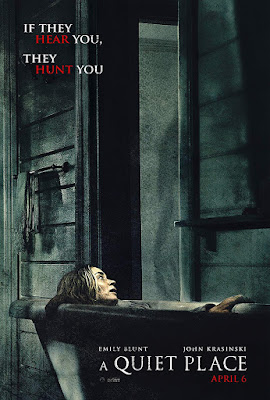

Genre Research: A Quiet Place


A Quiet Place
Director: John Krasinski

Camera Movements/Angles/Shots
In the opening of the film, a variety of different shots are used to establish a feeling of isolation and destruction. There's a close up of a fallen traffic light. A wide shot is used to show the surrounding area of a store. This area is nearly destroyed. There are topped over cars and debris all over the place. When inside the store, a low angle is used to introduce the characters to show their strength for surviving in a desolate area. A close-up of one of the character's face is obstructed by a shelf of medicine. The camera tracks the movement of her face and hand as she grabs a bottle off of the shelf. As the characters leave the store, we get a wide shot of a forest from a bird's eye view angle. Later on in the film, there's an extreme close up of a character's dirt-covered nails to show a passage of time.


Mise En Scene
The mise en scene in A Quiet Place helps give hints to what started the apocalypse and show the destruction the monsters caused. For example, when the characters enter a store, we can see newspapers littered around the outside. Items are strewn across the floor. When we get a clear view of the characters, we see that their clothes are dirty and their hair is matted. They are barefoot, which gives a hint as to what alerts the monsters. The colors in the store are sepia-toned. Because this segment of the film takes place a year before the rest, this could've been done to show nostalgia for before times got worse.

As the characters leave the store, we can see a pinboard covered in torn up and faded missing posters. There are destroyed cars and debris lined across the street. There are overgrown plants throughout the film. When technology is shown, it is usually broken and displays static. This helps show the isolation of the characters. Finally, towards the end of the film, CGI is used when the monsters are finally revealed.


Lighting
In the beginning of the film, back-lighting is used to make the mood feel more ominous with shadows. Throughout the movie, natural lighting is prominently used because most of the film takes place outside. When natural lighting isn't used, the setting is intentionally dark to set a mood. Red lights are used as an emergency signal and show urgency. In the end of the film, though, the room that the characters use for communications is lit up with blue lighting to make the viewers feel hope.

Sound
Sound is a key element in A Quiet Place. The monsters hunt through sound, so the film is almost entirely silent. There is very little dialogue and most sound is ambient. However, diegetic sound is used as a plot point. In the opening, one of the children is killed by a toy making noise. A man kills himself by screaming. Sound is used to distract the monsters and lead them away from the main characters. In the climax of the film, the characters learn that the sound of feedback kills the monsters. As in most films with horror elements, sounds like heartbeats are used to instill fear and tension.

Genre Research: Final Genre Decision

    I have researched three genres over the course of a few days. These genres are war, science fiction, and apocalypse. Originally, I was going to replace sci-fi with horror, but I thought horror and apocalypse were too similar. After much thought, I have decided to make my final task apart of the apocalypse genre. I think that my pitch idea fits into this genre the most out of the ones I researched. Additionally, following the conventions of an apocalypse movie will improve my final product more than sci-fi or war conventions. I have chosen the four movies I will watch to further understand the genre. These movies are Bird Box, A Quiet Place, 10 Cloverfield Lane, and Train to Busan.

Friday, January 24, 2020

Genre Research: Apocalypse and Sci-Fi

    The two genres I have chosen to research are apocalypse/doomsday and science-fiction. Originally, I was interested in researching the horror genre instead of sci-fi. However, because of how similar apocalypse and horror are, I decided to go for sci-fi instead.

Apocalypse

Common Lighting: Movies in the apocalypse genre use natural lighting, which allows for scenes with darkness that isn't too intense.

Camera Angles, Movements, and Shots: Extreme wide shots are a critical part of the apocalypse genre. They emphasize the isolation and destruction. Some wide shots are taken from a bird's eye view. These shots are often accompanied by pans, tilts, and trucking.

Mise En Scene: In movies where the plot takes place during or after the catastrophic event, the costumes and makeup of the cast look run down and torn up. Makeup is for gore purposes. In movies where the plot takes place before the apocalypse, the cast may wear clothes that are normal for their characters. Additionally, costumes change depending on what sets off the plot; a nuclear bomb could require a character to wear a hazmat suit, whereas a zombie apocalypse would not. Props can be used to show how much society has crumbled. For example, a pile of rubble could be used to show the destruction of a city. Finally, movies in this genre use special effects to make realistic gore or make a location seem as if it has fallen apart and is deserted.

Common Elements: In most apocalypse movies, the story revolves around a character or group of characters having to escape or live with the events of a post-apocalyptic world. Causes for the apocalypse include nuclear war, pandemic, the rise of technology, and in some cases, things like zombies and aliens. A major theme in apocalypse movies is survival.

Common Sound: The sound in apocalypse movies vary depending on what causes the apocalypse. For example, some use long moments of quiet to build up to a sudden, loud noise for horror purposes. However, others emphasize the chaos of the apocalypse by having constant loud sounds, such as screams, growls, or destruction noises.

Aspects I Like: I'm interested in the scenarios presented and how realistic they can feel.

Aspects I Dislike: The plots can be repetitive.

---

Science-Fiction

Common Lighting: Sci-fi movies utilize intense, fluorescent lighting to create a sterile and metallic futuristic setting. They may also use colored lighting to create a mood.

Camera Angles, Movements, and Shots: Similar to apocalypse movies, extreme wide shots are used heavily in sci-fi films. However, instead of showing destruction, wide shots are used to show the growth and development of society. Sci-fi movies use close-ups to show details of the technology shown. Low and high angles may be used in science fiction films that focus on a dystopia to show characters in positions of power and weakness.

Mise En Scene: Movies in the sci-fi genre typically take place in space and other futuristic settings. Depending on how far into the future the society in the film is, the costumes can range from regular clothing to technologically advanced suits and accessories. Props consist of complex technology, such as robots, weapons, and phones. The lighting in sci-fi movies may be bright and colorful to emphasize a change in society. Special effects (specifically CGI) are used to make the world seem more realistic and help the viewer imagine the future presented is close.

Common Elements: Sci-fi movies heavily feature futuristic elements, such as robots, space travel, aliens, and the rise of technology. Popular themes in modern sci-fi movies include artificial intelligence, how technology changes society, and dystopian societies.

Common Sound: Sound in science fiction movies are mostly computer generated sounds, which are used for things like robots or computers.

Aspects I Like: I enjoy the concepts that are presented and how thought-provoking they are. I also like seeing the special effects.

Aspects I Dislike: I dislike sci-fi movies that don't build upon the world and instead focus on the characters.


Wednesday, January 22, 2020

Genre Research: War


Back in September, we were given a genre at random to research and create a powerpoint on. On that assignment, I worked with a partner, but for the final task, I'm working alone. In the powerpoint, we put music that matched the genre, but that can't be heard due to the powerpoint being uploaded as JPEGs. The information in the powerpoint is simple, but it helped me understand the basics of researching a genre. The genre we researched was war. Most movies in the war movie have a similar mise en scene of greys, browns, and muted greens. They also have a variety of shots ranging from wide shots to extreme close ups. The sound will often be loud and filled with diegetic sound such as gunshots, but war movies also have quiet moments with non-diegetic music. This music aims to inspire a feeling of patriotism, which is a major theme in war movies.


Friday, January 17, 2020

Choosing the Pitch

      For the final task, I need to decide on a pitch. This choice is crucial because it will decide the path of the entire process. The first pitch idea I had was, "A man will do anything it takes to protect the strange secret behind his fortune." Story-wise, the pros of this pitch are that I can take it in many different directions. It would be easy to make the ending of the two minutes be captivating and make people want to watch more. From a technical standpoint, this pitch would be one of the easiest to make. It wouldn't need too many other actors or overly difficult editing techniques. However, I think the con of this pitch is that if I would have to plan the story beyond what I'm a filming a lot so I would be able to think of a convincing and interesting secret. Additionally, what I have in mind may be too comedy-leaning for this project. This could be easily fixed, though.

     The second idea I had was, "When a foreboding nuclear test site is disturbed, a town must cope with it's disastrous effects." This idea was inspired by the concept of long-time nuclear waste warning messages. These messages are meant to warn future civilizations about nuclear waste burial sites, even after language ends. The pros of this idea are that I already have a general idea on what I'd film for the first minute or so. Also, I feel that this would be the most interesting pitch to turn into a two minute clip. Above all else, I am the most inspired by this idea, which I think would make the quality of my final product much higher. However, the biggest issue with this pitch is where I would film it. I would have to find an abandoned, wasteland looking area, which may be difficult. I would also need to buy some costumes, which could end up being expensive, especially since they're just one time props.

  The third idea I had was, "A man with the ability to know the exact consequences of his actions uses his power for frivolous things." I am not going to use this pitch simply because I am the least inspired by it. I don't think the final product would make people want to watch more. Therefore, the choice is between the first two pitches. With everything considered, I am choosing the second pitch. I think that, if I can pull it off, it will make for a good final product. Additionally, there are workarounds to the costume problem I mentioned.

Starting the Final Task

      I'm Ava and I am a sophomore taking AICE Media Studies. Originally, I joined this class because I thought it'd be mildly interesting. However, after a year, I have a new appreciation for film making. I've found that I enjoy the pre-production process and have discovered that I enjoy storyboarding and planning out stories. This class has encouraged me to want to pursue writing as a hobby. This year, I have worked on a commercial and a music video. Today, I will be beginning the final task: making a two minute introduction to a movie. I will be working alone for this project because I think it will be more efficient. I won't have to work around other people's schedules.

     Throughout the year, I have gone from knowing very little about the film-making process to being able to make two full projects. Before this year, I hadn't used any high-quality camera equipment like the ones we utilize in class. I had only used one editing program and only knew how to do basic cuts and transitions. After completing the commercial and music video, I learned how to handle a camera and use more complex editing techniques. Specifically, I am now able to add, cut, edit, and overlay sound in Pinnacle Studios. However, for the final task, I am most excited to put my new knowledge of camera angles to use during the production process. In class and through the music video project, I learned about how different angles can be used as storytelling devices. I think this information will help me make a visually interesting movie introduction and enhance the filming experience.

       A pitch is a Hollywood term used to describe an idea where a film is encapsulated in 25 words or less. This type of pitch is specifically called an "elevator pitch", and it's typically 1-2 sentences. I have come up with 3 pitch ideas I am interested in using for my final task:
  1. Pitch 1: A man will do anything it takes to protect the strange secrets behind his fortune.
  2. Pitch 2: When a foreboding nuclear test site is disturbed, a town must cope with it's disastrous effects.
  3. Pitch 3: A man with the ability to know the exact consequences of his actions uses his power for frivolous things.